
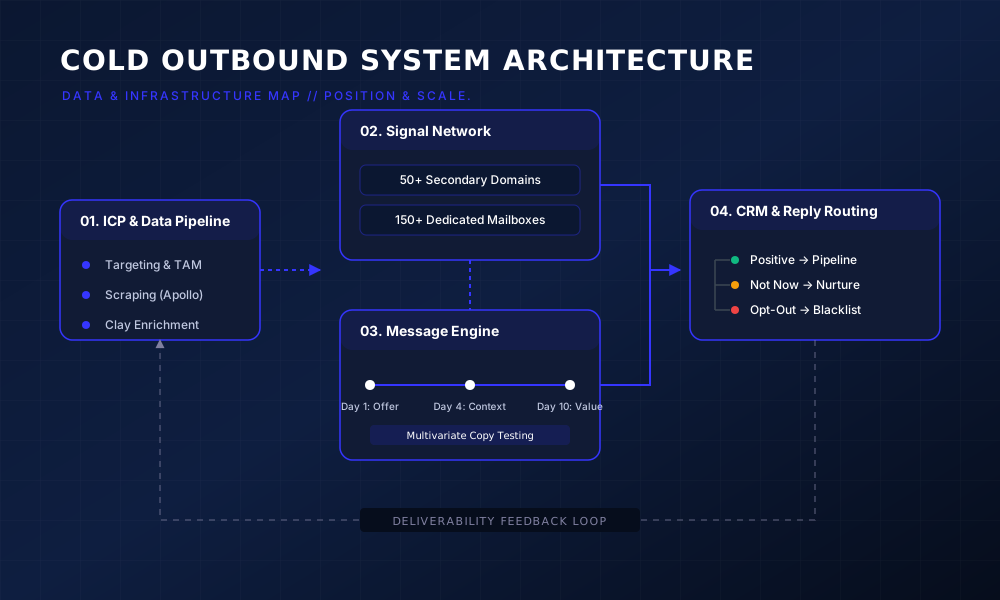
The word "infrastructure" gets used loosely in this space. Agencies use it to describe a Smartlead account and a contact list. That's not infrastructure. That's a starting point. This post breaks down what cold outbound infrastructure actually consists of, why the distinction matters, and what it looks like when it's built to operate at scale.
Why the Definition Matters
When a B2B company hires an outbound agency, they're buying an outcome: qualified sales meetings. The variable that determines whether that outcome materialises is not the copy, not the offer, and not the size of the contact list. It's the underlying system those things run on.
Infrastructure is the system. And like any system, it either holds under load or it doesn't.
A poorly built cold outbound system degrades over time. Domains burn. Deliverability drops. Reply rates decline. Contacts get exhausted. The agency either churns the client or quietly rebuilds in the background while blaming market conditions.
A properly built system gets more efficient over time. Deliverability improves. Data quality compounds. The feedback loop between replies, CRM, and targeting makes each subsequent campaign sharper than the last.
The difference is not effort. It's architecture.
The Six Components of Cold Outbound Infrastructure
This is the foundation. Every cold outbound system runs on secondary sending domains — not your primary business domain. The reason is simple: deliverability risk. If your sending reputation degrades, you do not want it affecting the domain you use for everything else.
A properly built architecture uses multiple secondary domains per client, each with 2-3 mailboxes. The number scales with send volume. At 5,000 emails per day, you are looking at 50+ domains and 150+ mailboxes operating in rotation.
Most agencies set up 3-5 domains and call it done. That works for low-volume campaigns. It does not work at scale, and it creates a single point of failure — one deliverability problem takes down the entire operation.
Deliverability is not a setup task. It is an ongoing operational function.
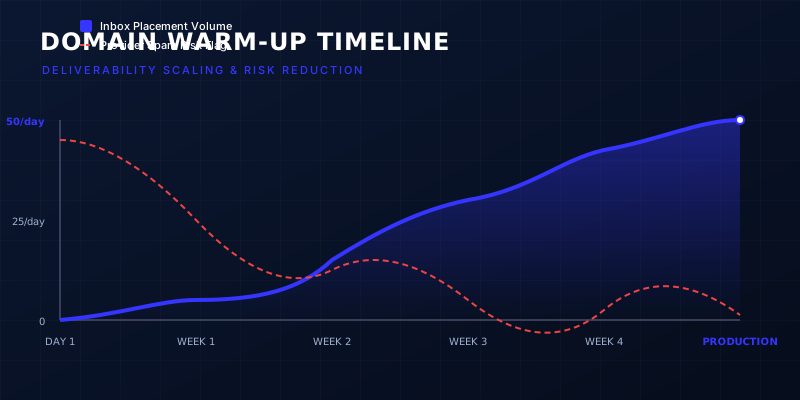
It covers domain warm-up (new domains need 4-6 weeks of progressively increasing send volume before they can operate at scale), DNS configuration (SPF, DKIM, DMARC records that tell receiving servers your mail is legitimate), inbox placement monitoring (knowing whether emails are landing in primary, promotions, or spam before reply rates tell you), and bounce rate management (keeping hard bounces below the thresholds that trigger provider flags).
This is where most agencies reveal themselves. A genuine infrastructure operator monitors deliverability daily. An agency running a template playbook checks it when something breaks.
The contact list is not separate from the infrastructure. It is part of it.
A list built without a precise ICP definition is not a list — it's noise. Sending cold outbound to imprecise targets does two things: it wastes send volume on contacts who will never convert, and it generates spam complaints from recipients who have no context for why they're being contacted. Both degrade deliverability. Both reduce output.
Proper list building starts with a positioning diagnostic. Before any contacts are scraped, the ICP needs to be defined with specificity: industry, company size, revenue range, tech stack, growth signals, hiring patterns, recent triggers. The more precise the targeting, the higher the signal-to-noise ratio of the list, and the better the deliverability because engaged recipients improve sender reputation over time.
At scale, this means using tools like Clay for enrichment and verification, Sales Navigator for filtering, and Apollo for initial contact identification — combined, not in isolation.
The sequence is not a set of emails. It is a structured conversation designed for a specific buyer at a specific stage of awareness.
A properly built sequence accounts for: touchpoint cadence (how many days between emails, when to introduce LinkedIn), message progression (each email assumes the previous was read but not replied to, which changes the framing), personalisation at scale (variable fields that pull from enriched contact data, not just first name and company name), and exit conditions (when to stop, when to re-engage, when to route to a different sequence).
What happens after a reply is where most outbound systems completely fall apart.
A reply is not a meeting. It is the beginning of a qualification conversation. How that conversation is managed — how fast the response comes, what the follow-up looks like, how the contact is routed into the CRM, and what nurture sequence they enter — determines whether the outbound investment converts into revenue or disappears into an unmanaged inbox.
Proper infrastructure connects the outbound system directly to the CRM. Replies are logged, contacts are tagged by intent (positive, neutral, not now, wrong person), and each intent triggers a different workflow. A "not now" reply enters a re-engagement sequence timed for 60-90 days. A positive reply triggers immediate routing to the sales team with full context.
The final component is the measurement layer that makes the system self-improving.
The metrics that matter are not open rates. Open rate data has been largely unreliable since Apple's Mail Privacy Protection changes in 2021. The metrics that matter are reply rate by sequence and variant, positive reply rate (separating interested from unsubscribes), meeting booked rate, and inbox placement rate by domain and mailbox.
These metrics feed back into every other component. Low reply rates trigger copy and targeting reviews. Declining inbox placement triggers deliverability audits. Low meeting rates despite positive replies trigger qualification and routing reviews. The system improves because the feedback loops are connected.
The data clearly shows that premium orchestration outlasts brute force. When you integrate Apollo data with ZeroBounce verification, run it through Clay for enrichment, and deploy via Smartlead, here is what the telemetry normally yields:
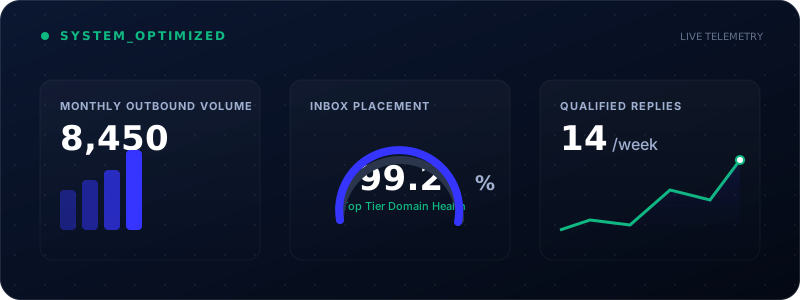
These numbers aren't theoretical—they're what happens when you combine elite tracking with precise B2B positioning.
Why Most Agencies Don't Have This
The honest answer is that building and operating genuine cold outbound infrastructure is operationally expensive and technically demanding. It requires daily management, specialised knowledge across multiple domains (deliverability, data, copywriting, CRM), and a willingness to invest in setup before generating output.
Most agencies optimise for margin. They use a handful of tools, build lightweight systems, and focus on activity metrics — emails sent, sequences launched — rather than the infrastructure quality that determines whether those activities produce results.
The incentive structure also plays a role. Monthly retainers reward client retention more than performance. An agency can survive on mediocre results if the relationship is strong and the reporting focuses on activity rather than outcomes.
The agencies that build real infrastructure do so because they understand that sustainable client retention comes from results, not relationships. And results, at scale, require systems that hold.
What Properly Built Infrastructure Looks Like in Practice
To make this concrete: a properly built cold outbound system for a mid-market B2B company running at 5,000 emails per day includes approximately 50 secondary sending domains, 150 mailboxes operating in rotation, daily deliverability monitoring across all domains, a contact database refreshed monthly with verified contacts, 2-3 active sequences running simultaneously with A/B variants, CRM integration with automated routing by reply intent, and weekly reporting on the metrics that actually reflect system health.
That is not what most agencies deliver. It is what the ones worth hiring are operating every day.
The Question Worth Asking Before You Hire Anyone
When evaluating a cold outbound agency, ask one question:
"What does your deliverability management process look like on a Tuesday?"
A vendor will describe a setup process. An infrastructure operator will describe a daily routine.
The difference in that answer tells you everything.
Let's audit what you have.
Position & Scale builds and operates cold outbound infrastructure for B2B companies. If your current system is underperforming or you're starting from scratch, we can show you exactly how to fix it.
Book a Strategy Call